Showing posts with label pork. Show all posts

Saturday, 16 April 2011

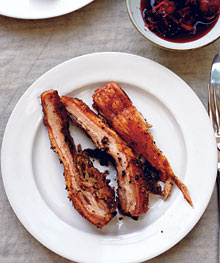
A Chinese-style pork roast with plum ginger sauce


The rule is that a sharp sauce is needed with pork to cut its fattiness. More important, I think, is the fact that the sauce should flatter the gamey notes of the meat. Apples do this well enough but gooseberries do it better, having more natural sharpness than any "cooking" apple. Plums and damsons flatter the flesh of the pork as well as the fat, and their fruity notes blend harmoniously with the pan juices.

The Chinese flavours here demand something other than potatoes as an accompaniment, so I go for some dark green cabbage, coarsely shredded the width of pappardelle and cooked in a very little water till bright emerald green. No butter, just vital, earthy greens to contrast with the richness of the meat and its sauce

ENOUGH FOR 4-6

a piece of pork belly about 1.5kg
Szechuan peppercorns 2 tbsp
sea salt flakes 3 tbsp
ground anise 1 tsp
For the sauce:
sharp plums or damsons 900g
sugar 3 tbsp
water 120ml
fresh ginger a large knob about the size of a walnut, peeled and cut into matchsticks
star anise 4
salt ½ tsp
smooth red wine vinegar 2 tbsp

Put the pork in a shallow dish. Warm the Szechuan peppercorns in a non-stick pan till they start to crackle a bit, then remove from the heat. Grind together the salt, toasted peppercorns and the ground anise. Easiest with a pestle and mortar, but you can also do it with a plastic bag and a rolling pin. You want a fine, beige powder. Rub the spice mixture over the pork and its skin, cover lightly with greaseproof paper and set aside for at least 8 hours, preferably overnight in the fridge. This is for the dry marinade to work its magic.

To make the sauce, put the plums or damsons into a colander and give them a good rinse under cold running water, pulling off any stalks and leaves as you go. Tip the fruit into a stainless steel saucepan (aluminium will taint sour fruits such as plums), add the sugar, water, ginger, anise and salt and bring to the boil. Leave to simmer for about 10 to 15 minutes, until the fruit has burst and the sauce has thickened to a deep purple-red. Stir in the vinegar and simmer for 5 minutes more. Watch that it doesn't become too thick or catch on the bottom; it is inclined to get a bit jammy at this stage.

Put the sauce somewhere to cool or, if spitting out stones at the table really isn't your thing, sieve it first: tip it into a large sieve set over a bowl and push the fruit through with a wooden spoon. Keep going till all you have left is a few stones. Set aside; you can warm it up just before you serve the pork.

Roast the pork in an oven set at 200C/gas mark 6 for about an hour, basting occasionally. Leave to rest for 10 to 15 minutes before carving, and pass the sauce around at the table.

Friday, 15 April 2011

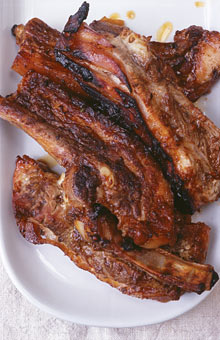
Crisp Belly Pork Roast

Ask your butcher to score the skin finely for this, as the crackling is essential. The first brief roasting at the higher temperature is necessary to set the crackling on the route to crispness. I rather like a pile of Chinese greens, lightly steamed, with this.

Ingredients (Serves 5-6)

    belly pork – 1-1.5kg, boned, skin intact and finely scored
    For the rub: garlic – 3 cloves
    light soy sauce – 2 tbs
    groundnut oil – a tbs
    salt – 2 tsp
    Chinese five-spice powder – a level tsp


Put the pork in a china or glass dish. Peel and crush the garlic to a paste, stirring in the soy, oil, salt and five-spice powder. Spread this paste over the skin and underside of the pork. Leave it to marinate for a good 4 hours, if not overnight.

Salad of broccoli and roast pork. Photograph: Jonathan Lovekin
Set the oven at 220°C/Gas 8. Place the pork in a roasting tin then cook, skin-side up, for about 20 minutes. Lower the heat to 200°C/Gas 6 and continue cooking for a further 40-50 minutes till the skin is dark and crisp.

Leave for 10 minutes to rest before carving.

Tuesday, 31 August 2010

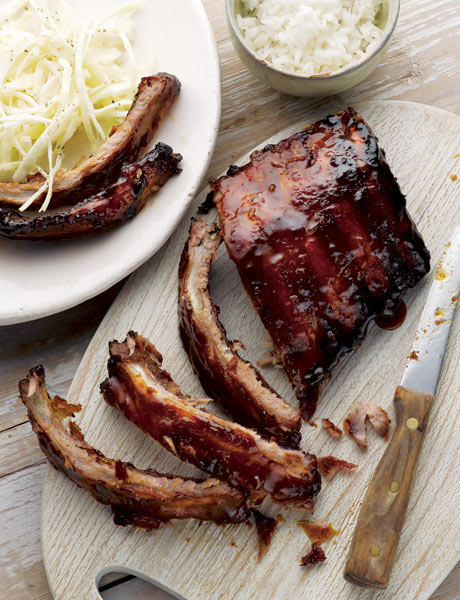
Sticky five-spice Ribs


Ingredients (Serves four)

    2kg rack pork back ribs
    4 garlic cloves, crushed
    2 tbsp freshly grated root ginger
    125ml soy sauce
    125ml hoisin sauce
    60ml honey
    1 tsp five-spice powder
    2 tbsp mild-flavoured oil, such as sunflower
    For the cabbage salad
    ¼ cabbage, cored
    2 tbsp white-wine vinegar
    A few drops sesame oil
    Sea salt
    ½ tsp sugar
    To serve
    Steamed rice

Put the ribs in a baking dish. Place all the remaining rib ingredients in a food processor and pulse until smooth (or simply stir together in a bowl). Pour all but a few tablespoons of this marinade over the ribs and rub well in. Turn the ribs meat-side down, ready for cooking.

Heat the oven to 200C/400F/gas mark 6. Bake the ribs for 40 minutes, then turn them over and brush with the reserved marinade. Raise the heat to 220C/425F/gas mark 7, and cook for 10 minutes more.

Meanwhile, shred the cabbage and place in a bowl. Combine the vinegar, sesame oil, salt and sugar to make a dressing, drizzle over the cabbage and toss with your hands.

Lift the ribs on to a board and cut each rib off the rack. Serve with the cabbage salad and steamed rice.

Thursday, 12 August 2010

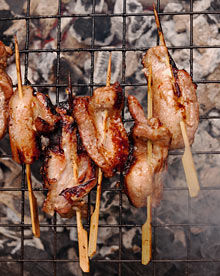
Five-spice grilled pork belly


Almost any cut will work. As would a small pork steak or chop.

Ingredients (makes 20 skewers)


    750g pork belly
    For the marinade:
    3 cloves garlic
    1 thumb-sized lump ginger
    2 tbsp light soy sauce
    3 tbsp rice wine
    1 lightly heaped tsp five-spice powder
    1 tsp salt
    2 tbsp runny honey
    20 flat, strong wooden skewers


Put the pork on a chopping board and slice in half lengthways, then cut each half into thin strips no thicker than 2cm. Put the pieces of meat into a dish or roasting tin.

Peel and finely crush the garlic using a pestle and mortar. Peel and finely grate the ginger into the garlic. Stir in the soy sauce, rice wine, five-spice, salt and honey. Tip this marinade over the pork and toss gently to lightly coat the meat. Set aside for a good hour, though a couple more (or overnight) would be better. Soak the skewers for an hour or more in cold water.

Thread each piece of meat on to a skewer. Get the grill hot. When the charcoal is grey and there are no longer flames or vividly glowing coals, lay the skewers on the bars of the grill. Leave until the underside is golden brown (the timing will depend on the thickness of your pork and the heat of your charcoal, but you should reckon on about 8-10 minutes), then turn and cook the other side.

When the pork is cooked through and the fat deep golden, remove and serve.