Saturday, 11 December 2010

Guinea fowl with orange and szechuan pepper

Guinea fowl with orange and Szechuan pepper
Guinea fowl with orange and Szechuan pepper. Photograph: Jonathan Lovekin

Magnificent as the traditional Christmas bird can be, there are several others worth considering at this time of year. As most of them feed much smaller numbers than either goose or turkey, they are perfect for the many smaller but nevertheless celebratory meals held around this time of year. Pheasant, guinea fowl, duck, partridge and quail take surprisingly well to a bit of mild spicing – nothing inappropriately hot, just warm and aromatic. So this year's birds come with hints of cardamom and orange, cayenne and clove. Mild spices for a festive roast.

Hugely underrated, the guinea fowl offers fine, slightly gamey meat that is rarely anything but tender. One bird will feed two people. Schezuan pepper has a curious flavour, both warm and slightly lemony. I tend to toast it lightly before use.

Ingredients (Serves 2)

butter – a thin slice
olive oil – 2 tbs
a large guinea fowl, about 1.5kg
onions – 2 medium
carrots – 2 medium
celery – a stick or two
garlic – 1 clove
Szechuan peppercorns – 1 tsp
flour – 1 heaped tbs
stock – 600ml
orange peel – 4 long strips
a couple of bay leaves
star anise – 3 whole ones

Set the oven at 200˚C/Gas 6.

Melt the butter in the oil in a large, deep casserole. Cut the guinea fowl in half through the backbone, salt and pepper it, then colour it lightly on both sides in the butter and oil. Remove and set aside.

Peel the onions and cut them in half and then into thick segments. Put them in the pan in which you browned the guinea fowl halves and leave to colour over a moderate heat.

Scrub and roughly chop the carrots, trim and roughly chop the celery, then add them to the onions.

Peel the garlic, crush and add it. Toast the peppercorns in a dry frying pan then crush or grind fairly finely and add them together with the flour.

Continue cooking for 3 or 4 minutes then pour in the stock.

Bring to the boil then turn down to a simmer. Season with salt, pepper, the orange peel, bay and the star anise, then return the guinea fowl to the pan.

Cover with a lid, then put in the oven and leave to bake for 50 minutes.

Serve, surrounded by its sauce and vegetables.


Gingerbread House

Gingerbread house

If you have a few hours to spare one weekend between now an Christmas, use them to make a gingerbread house. I had a good time this week creating a template – with Molly, our youngest daughter – for a very English gingerbread house. Lots of the patterns around are Scandinavian (this gingerbread recipe comes from Norway), as they're much keener on making gingerbread houses than we are, so we decided to make a cottage/ramshackle farmhouse instead. We then made the house and stuck it together with toffee and iced the roof with dollops of snow. A final massive dusting of icing sugar did wonders for hiding any cracks and holes.A piping bag is handy for the toffee but not essential, and you need a large tray or cake board. The house here is on a 30cm by 50cm tray, leaving a bit of room for a garden.

Makes a small house

For the gingerbread dough:

450g runny honey
4 eggs
350g caster sugar
1kg plain flour
zest of 1 lemon and 1 orange
100g ground almonds
100g ground hazelnuts
8 tsp ground mixed spice
pinch of salt
2 tsp bicarbonate of soda

For the toffee: 225g white caster sugar

For the royal icing:

2 egg whites, beaten until frothy
450g icing sugar
juice of 1 lemon

To make the dough, heat the honey gently. Beat the eggs and sugar until fluffy, add the warm honey, and then combine the wet mixture with the remaining dry ingredients. Fold them gently together and knead into a soft dough. Wrap the dough in cling film and leave it in the fridge for a few hours.

Preheat the oven to 180°C/Gas 4.

Roll out the dough thinly (approximately 5mm thick) and cut it into the shapes of your pattern.

Put the sections on greaseproof paper rubbed with a trace of sunflower oil, or a silicone mat. Bake each section in the preheated oven for about 15 minutes until golden brown and leave to cool on a wire rack. The gingerbread will be soft when it comes out of the oven but cools to a crisp biscuit.

(The dough will keep for up to 4 weeks in the fridge. If you have any left over, make biscuits and shapes to hang on your tree.)

When you're ready to construct the house, make the toffee to use as glue. Melt the sugar slowly in a saucepan until it starts to brown. Take care not to let it burn. Pour the toffee into a measuring jug, and from there into the piping bag. Take care not to touch the toffee as it will be exceptionally hot. (To be extra safe, use heat-proof gloves.) Pipe the toffee out of the bag, using it to stick one bit of the house to the next.

Next make the royal icing for the base and snow on the roof. Whisk the beaten egg whites until frothy but not stiff, and mix in 2 tbs of icing sugar and the lemon juice to make a paste. Gradually add the rest of the icing sugar until the icing is soft and holds its shape. If the mix is still sloppy, add more icing sugar.

First spread the icing all over the base board quite thickly – like snow – using it to hold the walls in place. Then pipe it on to the house. For the one on page 15, we iced the tops of the windows and ridge of the roof and then dusted the whole thing with icing sugar.

If you don't eat it straight away, the gingerbread house will keep for months.

Blood orange and pink grapefruit sorbet with limoncello

After a big Christmas meal, there's nothing better than a few mouthfuls of this sharp and sweet blood orange and pink grapefruit sorbet. Fill a glass with a few scoops and pour over the lemon vodka, or limoncello

Ingredients (Serves 4-6)


    juice of 5 blood oranges (should give about 500ml juice)
    juice of 2 pink grapefruits (should give about 300ml juice)
    150g sugar
    limoncello, to serve


Blood orange and pink grapefruit sorbet

Scrub and dry the fruit and, using a zester, remove the zest of the oranges. Dissolve the sugar in 200ml water in a small saucepan over a low heat. Add half the orange zest and bring to the boil for 2-3 minutes. Allow to cool and strain.

Squeeze the juice from all the oranges and grapefruits and combine it with the cold syrup and reserved, uncooked zest.

Pour into an ice-cream maker. Freeze/churn for 20-25 minutes and pack into a plastic container. Freeze for at least an hour before serving. If you haven't got a machine, pour into a plastic food container and freeze for 2 hours. Take out of the freezer and stir with a fork. Return to the freezer and repeat this process twice, stirring at two-hourly intervals.

Allow the sorbet 20-25 minutes in the fridge to soften slightly before serving. Put 2 scoops per person into a glass and pour a little limoncello over each one.

Zuppa Inglese

Christmas just isn't Christmas without trifle. This classic Italian version literally takes 10 minutes to put together with bought ingredients from your local supermarket. I do like to add my own chocolate to the custard rather than buying chocolate custard – this ensures a quality chocolate flavour.

Ingredients Serves 4-6

    125ml espresso coffee
    125ml coffee liqueur
    2 tbs cognac, or brandy
    1 litre vanilla custard, homemade or shop-bought
    100g dark chocolate, roughly chopped
    1 x 16cm round sponge cake, cut into 1cm slices
    finely grated dark chocolate or unsweetened cocoa powder, to dust

Zuppa Inglese

Stir together the espresso, liqueur and cognac. Put half your custard in a pan over a low heat and slowly melt in your chocolate. Once melted, remove from the heat.

Start with a little vanilla custard at the bottom of each dish and top with a layer of cake slices. Moisten the cake generously by spooning over the espresso mixture. Follow this with a layer of chocolate custard. Repeat the cake soaked with espresso mixture, and top with vanilla custard. Repeat until all the cake and custard have been used, finishing with a layer of custard. Chill for at least 4 hours, or overnight. Dust with dark chocolate or cocoa powder to serve.

Saturday, 2 October 2010

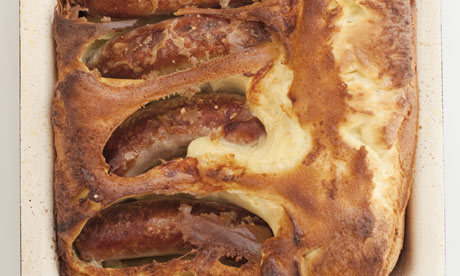
Toad In The Hole

The sausage is a relative newcomer to the position of toad, the space having been previously reserved for any small pieces of meat that could be eked out with a bit of batter. Scraps of the Sunday roast, bits of cooked ham or pretty much anything you like have been used in place of the sausages, and never more so than after the war. Nowadays it's bangers or nothing. The recipe stands or falls by the quality of the sausage you use.


The Recipe


Set the oven at 220C/gas mark 7. Whisk together 2 eggs and 300ml of full-fat milk. Add a good pinch of salt, then beat in 125g plain flour. Heat 3 tbsp of lard or dripping in a small roasting tin or baking dish until it starts to smoke. Add 6 fat pork sausages and let them colour on all sides then, while the oil and sausages are smoking hot, pour in the batter. Bake for 25-30 minutes until puffed and golden.

The Trick


Like making Yorkshire pudding, get the fat in the roasting tin (literally) smoking hot before adding the batter. I put the lightly cooked sausages in the pan first then pour in the batter when you can see a blue haze rising. I am a great believer in letting the batter rest before using, though others disagree.

The Twist


Nigella's adorable new book Kitchen (Chatto and Windus, £26) turns the toad on its head by using sausage patties, the meat pressed from its casing and shaped into tiny burgers. Delightful, especially if you season them with thyme. I often wrap my sausages, minus their skins, in very thin bacon or pancetta. Onion gravy is the usual accompaniment, but new thinking involves hot, rough-textured tomato sauce or even a creamy mustard one, such as you might serve with rabbit.

Friday, 1 October 2010

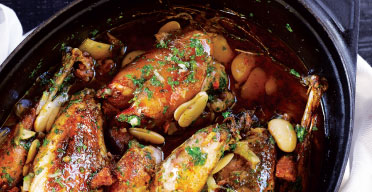
Pot-roast pheasant with chorizo, butter beans and parsley

This recipe comes from River Cottage's head chef, Gill Meller - it's a fantastic winter warmer which tastes even better reheated and eaten the day after you make it. Give the butter beans a full 24-hour soak before cooking - it really helps to make them tender and buttery.

Ingredients (Serves four)


    200g dried butter beans
    1 knob butter
    3 tbsp olive oil
    2 onions, peeled and finely sliced
    4 cloves garlic, peeled and finely sliced
    3-4 sprigs fresh thyme
    2 bay leaves
    Salt and freshly ground pepper
    2 oven-ready pheasants
    200-300g cooking chorizo, outer skin removed, flesh chopped into 2-3cm chunks
    1 pig's trotter (optional)
    300ml white wine
    500ml chicken or game stock (or water)
    1 handful flat-leaf parsley, chopped

    Cover the beans with plenty of cold water and leave to soak for 24 hours.

    Preheat the oven to 170C/325F/gas mark 3. Place a large casserole over a medium heat; add the butter and a tablespoon of olive oil. Add the onions, garlic, thyme and bay leaves. Cook for at least 10 minutes, until soft and golden, stirring regularly to prevent them over-colouring.

    Meanwhile, set a large frying pan over a high heat and add two tablespoons of olive oil. Season the pheasants all over, brown on all sides for three to four minutes, then transfer to the casserole.

    Add the chorizo to the frying pan, along with the pig's trotter (if using). Fry for three to four minutes to brown, then add to the casserole. Deglaze the frying pan with a little of the wine, then add to the casserole, along with the remaining wine, the stock and the drained beans. Bring the casserole up to a simmer, then cover, move to the oven and cook for two hours.

    Remove the birds from the pan and set aside to rest in a warm place. Discard the pig's trotter (or save it for a midnight snack). If the chorizo has released a lot of fat, skim some off. Add the parsley and season to taste. Carve the birds and divide them between warmed plates. Spoon over the chorizo, beans and sauce, and serve with mash and/or lots of bread.

Tzatziki

Excellent with bread, vegetable fritters, meatballs or crudités.

Ingredients (Makes 600ml)


    750ml plain yoghurt
    1 long, thin cucumber, peeled and
    finely chopped
    3-4 garlic cloves, finely chopped
    ¼ tsp salt
    3-4 tbs olive oil
    3 tbs finely chopped fresh dill

Line a colander with cheesecloth (muslin) or a double thickness of paper towels and spoon the yoghurt into it. Let drain over a bowl in the refrigerator for about 6 hours. Transfer the strained yoghurt from the strainer to a bowl. Stir in the cucumber, garlic, salt and oil. Cover and chill.

Serve in a shallow bowl, sprinkled with the dill.