Monday, 11 April 2011

Limoncello

Limoncello liqueur


This is quick and easy to make – it will take about 10 minutes – but then needs to be left for a couple of weeks at least before you drink it. Then the lemon zest and lemon grass really infuse the vodka to give a delicious sharp but rich taste.

Makes 750ml bottle

    8 unwaxed lemons
    2 lemon grass stems
    700ml bottle of good quality vodka
    220g caster sugar


Zest the lemons and crush the lemon grass and put them into a large sterilised kilner or preserving jar and pour over the vodka.

Put the sugar into a saucepan with 350ml water, bring to the boil, turn down the heat and simmer for 3-4 minutes. Leave the syrup to cool, then add it to the lemon zest mixture.

Seal the preserving jar and leave for a couple of weeks in a cupboard, shaking and turning every so often. Then strain the limoncello into bottles. This is best served ice cold, straight from the freezer.

Saturday, 2 April 2011

The Perfect Patatas Bravas

Roast potatoes instead of frying them, which gives a less greasy, but equally crisp result (and is also considerably easier in most home kitchens) and make a sauce with smoked paprika, rather than chargrilled chilli, to add some depth, as well as a fresh chilli for heat.

The creamy, unashamedly garlicky allioli-style sauce completes the dish perfectly.Paired with a chilled Spanish beer, I finally understand what all the fuss was about.

Ingredients(Serves 4-6)


    500g waxy potatoes
    300ml olive oil
    1 small onion, finely chopped
    1 red chilli, finely chopped
    400g tin chopped tomatoes
    ½ tsp sugar
    ½ tsp salt
    1 tsp smoked paprika
    2 tbsp sherry vinegar
    1 egg
    1 clove garlic, crushed
    Chives, to serve


  1. Preheat the oven to 200C. Peel the potatoes and cut into rough 2cm chunks. Put a roasting tray with 2 tbsp olive oil into the oven and leave to heat for 5 minutes, then take out, toss the potatoes in the hot oil, and bake for about 45 minutes until crisp and golden.
  2. Meanwhile, make the sauces. Put 2 tbsp oil into a heavy-bottomed pan on a medium heat, and cook the onion for about seven minutes until golden and soft. Put in the chilli, and cook for another couple of minutes, then add the tomatoes, sugar, salt and smoked paprika and stir well. Bring to the boil, and then turn down the heat and simmer for about 20 minutes until thick and dark. Take off the heat, add 1 tbsp sherry vinegar, and adjust the seasoning if necessary.
  3. To make the allioli, put the egg in the small bowl of a food processor along with the garlic and 1tbsp sherry vinegar. Add 1 tbsp olive oil and whizz until incorporated, then drizzle in the rest of the olive oil with the motor running, until you have creamy mayonnaise-style sauce. Season to taste. (You can also use a hand blender, but it's harder to drizzle and beat at the same time.)
  4. Take the potatoes out of the oven and sprinkle with a little salt. Spread the tomato sauce on to the plates, put the potatoes on top, then add a dollop of allioli and a sprinkle of chives, and serve immediately.

Saturday, 19 March 2011

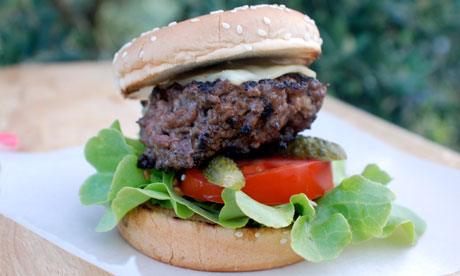
The Perfect Burger


Ingredients (Serves 6)


    1 tbsp oil or butter
    1 large onion, finely chopped
    1kg roughly minced chuck steak (or any non-lean mince)
    100ml stout
    2 tbsp brown breadcrumbs
    2 tsp chopped herbs (parsley or thyme work well)
    1 tsp salt
    Black pepper
    Garnishes, sauces and rolls, as desired


Heat the oil in a frying pan over a low heat, and cook the onion until soft and slightly browned. Leave to cool.

Spread the beef out and sprinkle over the onion. Add the stout, breadcrumbs, herbs and seasoning and mix together with a fork, being careful not to overwork it.

Divide the meat into 12 flattish burgers, putting a dimple in the centre of each. Cover and refrigerate for an hour.

Cook the burgers on a medium to hot barbecue or griddle pan: leave them undisturbed for the first 3 minutes so they build up a good seal on the bottom, then carefully turn them over, adding a slice of cheese on top if desired. Cook for a further 4 minutes for rare, and 7 for well done, and allow to rest for a few minutes before serving. (You can toast buns, cut-side down, on the barbecue at this point.)

What goes into your perfect hamburger – and what goes on top? Is beef still best for burgers, and where serves the finest in the world?

Saturday, 11 December 2010

Guinea fowl with orange and szechuan pepper

Guinea fowl with orange and Szechuan pepper
Guinea fowl with orange and Szechuan pepper. Photograph: Jonathan Lovekin

Magnificent as the traditional Christmas bird can be, there are several others worth considering at this time of year. As most of them feed much smaller numbers than either goose or turkey, they are perfect for the many smaller but nevertheless celebratory meals held around this time of year. Pheasant, guinea fowl, duck, partridge and quail take surprisingly well to a bit of mild spicing – nothing inappropriately hot, just warm and aromatic. So this year's birds come with hints of cardamom and orange, cayenne and clove. Mild spices for a festive roast.

Hugely underrated, the guinea fowl offers fine, slightly gamey meat that is rarely anything but tender. One bird will feed two people. Schezuan pepper has a curious flavour, both warm and slightly lemony. I tend to toast it lightly before use.

Ingredients (Serves 2)

butter – a thin slice
olive oil – 2 tbs
a large guinea fowl, about 1.5kg
onions – 2 medium
carrots – 2 medium
celery – a stick or two
garlic – 1 clove
Szechuan peppercorns – 1 tsp
flour – 1 heaped tbs
stock – 600ml
orange peel – 4 long strips
a couple of bay leaves
star anise – 3 whole ones

Set the oven at 200˚C/Gas 6.

Melt the butter in the oil in a large, deep casserole. Cut the guinea fowl in half through the backbone, salt and pepper it, then colour it lightly on both sides in the butter and oil. Remove and set aside.

Peel the onions and cut them in half and then into thick segments. Put them in the pan in which you browned the guinea fowl halves and leave to colour over a moderate heat.

Scrub and roughly chop the carrots, trim and roughly chop the celery, then add them to the onions.

Peel the garlic, crush and add it. Toast the peppercorns in a dry frying pan then crush or grind fairly finely and add them together with the flour.

Continue cooking for 3 or 4 minutes then pour in the stock.

Bring to the boil then turn down to a simmer. Season with salt, pepper, the orange peel, bay and the star anise, then return the guinea fowl to the pan.

Cover with a lid, then put in the oven and leave to bake for 50 minutes.

Serve, surrounded by its sauce and vegetables.


Gingerbread House

Gingerbread house

If you have a few hours to spare one weekend between now an Christmas, use them to make a gingerbread house. I had a good time this week creating a template – with Molly, our youngest daughter – for a very English gingerbread house. Lots of the patterns around are Scandinavian (this gingerbread recipe comes from Norway), as they're much keener on making gingerbread houses than we are, so we decided to make a cottage/ramshackle farmhouse instead. We then made the house and stuck it together with toffee and iced the roof with dollops of snow. A final massive dusting of icing sugar did wonders for hiding any cracks and holes.A piping bag is handy for the toffee but not essential, and you need a large tray or cake board. The house here is on a 30cm by 50cm tray, leaving a bit of room for a garden.

Makes a small house

For the gingerbread dough:

450g runny honey
4 eggs
350g caster sugar
1kg plain flour
zest of 1 lemon and 1 orange
100g ground almonds
100g ground hazelnuts
8 tsp ground mixed spice
pinch of salt
2 tsp bicarbonate of soda

For the toffee: 225g white caster sugar

For the royal icing:

2 egg whites, beaten until frothy
450g icing sugar
juice of 1 lemon

To make the dough, heat the honey gently. Beat the eggs and sugar until fluffy, add the warm honey, and then combine the wet mixture with the remaining dry ingredients. Fold them gently together and knead into a soft dough. Wrap the dough in cling film and leave it in the fridge for a few hours.

Preheat the oven to 180°C/Gas 4.

Roll out the dough thinly (approximately 5mm thick) and cut it into the shapes of your pattern.

Put the sections on greaseproof paper rubbed with a trace of sunflower oil, or a silicone mat. Bake each section in the preheated oven for about 15 minutes until golden brown and leave to cool on a wire rack. The gingerbread will be soft when it comes out of the oven but cools to a crisp biscuit.

(The dough will keep for up to 4 weeks in the fridge. If you have any left over, make biscuits and shapes to hang on your tree.)

When you're ready to construct the house, make the toffee to use as glue. Melt the sugar slowly in a saucepan until it starts to brown. Take care not to let it burn. Pour the toffee into a measuring jug, and from there into the piping bag. Take care not to touch the toffee as it will be exceptionally hot. (To be extra safe, use heat-proof gloves.) Pipe the toffee out of the bag, using it to stick one bit of the house to the next.

Next make the royal icing for the base and snow on the roof. Whisk the beaten egg whites until frothy but not stiff, and mix in 2 tbs of icing sugar and the lemon juice to make a paste. Gradually add the rest of the icing sugar until the icing is soft and holds its shape. If the mix is still sloppy, add more icing sugar.

First spread the icing all over the base board quite thickly – like snow – using it to hold the walls in place. Then pipe it on to the house. For the one on page 15, we iced the tops of the windows and ridge of the roof and then dusted the whole thing with icing sugar.

If you don't eat it straight away, the gingerbread house will keep for months.

Blood orange and pink grapefruit sorbet with limoncello

After a big Christmas meal, there's nothing better than a few mouthfuls of this sharp and sweet blood orange and pink grapefruit sorbet. Fill a glass with a few scoops and pour over the lemon vodka, or limoncello

Ingredients (Serves 4-6)


    juice of 5 blood oranges (should give about 500ml juice)
    juice of 2 pink grapefruits (should give about 300ml juice)
    150g sugar
    limoncello, to serve


Blood orange and pink grapefruit sorbet

Scrub and dry the fruit and, using a zester, remove the zest of the oranges. Dissolve the sugar in 200ml water in a small saucepan over a low heat. Add half the orange zest and bring to the boil for 2-3 minutes. Allow to cool and strain.

Squeeze the juice from all the oranges and grapefruits and combine it with the cold syrup and reserved, uncooked zest.

Pour into an ice-cream maker. Freeze/churn for 20-25 minutes and pack into a plastic container. Freeze for at least an hour before serving. If you haven't got a machine, pour into a plastic food container and freeze for 2 hours. Take out of the freezer and stir with a fork. Return to the freezer and repeat this process twice, stirring at two-hourly intervals.

Allow the sorbet 20-25 minutes in the fridge to soften slightly before serving. Put 2 scoops per person into a glass and pour a little limoncello over each one.

Zuppa Inglese

Christmas just isn't Christmas without trifle. This classic Italian version literally takes 10 minutes to put together with bought ingredients from your local supermarket. I do like to add my own chocolate to the custard rather than buying chocolate custard – this ensures a quality chocolate flavour.

Ingredients Serves 4-6

    125ml espresso coffee
    125ml coffee liqueur
    2 tbs cognac, or brandy
    1 litre vanilla custard, homemade or shop-bought
    100g dark chocolate, roughly chopped
    1 x 16cm round sponge cake, cut into 1cm slices
    finely grated dark chocolate or unsweetened cocoa powder, to dust

Zuppa Inglese

Stir together the espresso, liqueur and cognac. Put half your custard in a pan over a low heat and slowly melt in your chocolate. Once melted, remove from the heat.

Start with a little vanilla custard at the bottom of each dish and top with a layer of cake slices. Moisten the cake generously by spooning over the espresso mixture. Follow this with a layer of chocolate custard. Repeat the cake soaked with espresso mixture, and top with vanilla custard. Repeat until all the cake and custard have been used, finishing with a layer of custard. Chill for at least 4 hours, or overnight. Dust with dark chocolate or cocoa powder to serve.